Phase 1 — Find
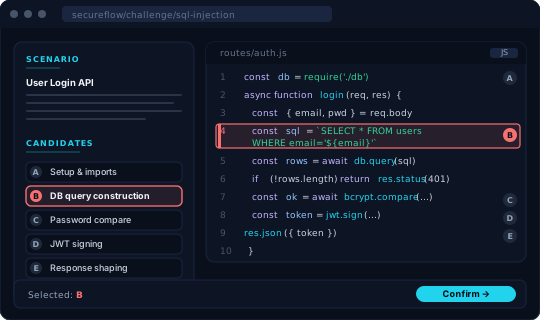
1500+ code reviews across 310+ vulnerability classes — each one a production-realistic snippet in the language your team ships. Five candidate blocks, one real flaw.
Secure coding + compliance evidence for the AI era — OWASP LLM, Agentic AI and Secure AI-Assisted Development mapped to EU AI Act, ISO 42001 and NIST AI RMF, alongside Web/API/Mobile Top 10 tied to PCI DSS and ISO 27001.
Phase 1: spot the vulnerable block in production code. Phase 2: pick the right fix among four plausible candidates — not "one obvious answer."
1500+ code reviews across 310+ vulnerability classes — each one a production-realistic snippet in the language your team ships. Five candidate blocks, one real flaw.
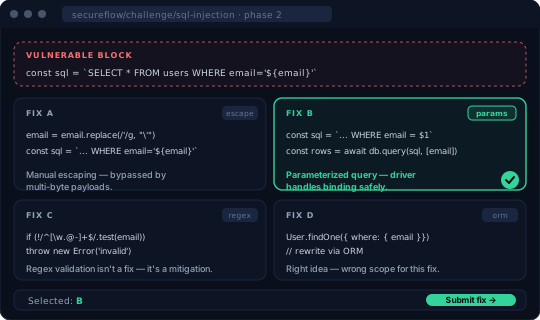
Smart distractors — each wrong fix is a real-world AppSec mistake (escape-only, regex-validation, ORM-without-binding) with the explanation of why it fails. Devs learn the difference between a fix and a mitigation.
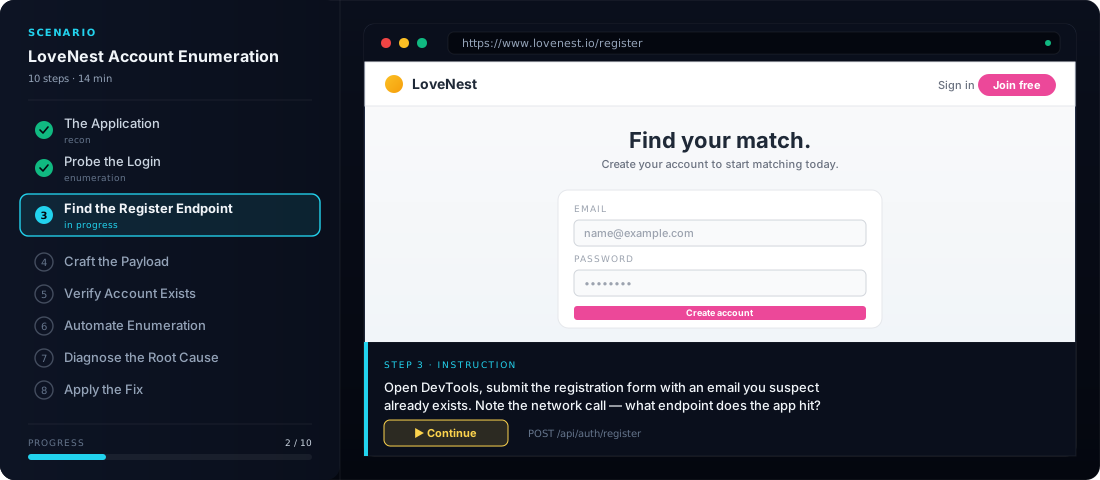
114 scenarios. 1537 interactive steps. Each one drops the engineer into a simulated browser, terminal and intercepting proxy — running recon, landing the exploit, and then closing the gap in code. One attack class, one short focused session.
Each engineer picks their stack on first visit. Every challenge then loads in the language and framework they actually ship — Python f-strings, Go's fmt.Sprintf, C#'s string interpolation, Java's PreparedStatement — not a stripped-down pseudocode that maps to nothing in production.
Anonymized customer outcomes from banks, fintechs and insurers. Named reference calls available on approval.
SAML 2.0 with JIT provisioning, SCIM 2.0 lifecycle sync, SCORM 1.2/2004 for any LMS, and a multi-tenant admin plane with role-based delegation. None of it bolt-on — all of it live from Day 1.
Every challenge is pre-tagged to the framework it satisfies — so audit time isn't a fire drill, it's a query.
30 minutes with our team. We'll walk through the admin dashboard, the PCI / ISO / OWASP mappings, and how SSO and SCIM light up for your IdP.